
44 Minutes, 176k Tokens: Fable 5.1 Cracks a 370-Year-Old Cipher
Vals AI gave Claude Fable 5.1 Urquhart's unsolved Cyphral Distich: solved in 44 minutes, 176k tokens, zero interjections — and it went on to decode the 285-number Octastich too.
23 posts
Vals AI gave Claude Fable 5.1 Urquhart's unsolved Cyphral Distich: solved in 44 minutes, 176k tokens, zero interjections — and it went on to decode the 285-number Octastich too.

AMD Ryzen AI Max PRO 390 with 64GB unified memory runs 32B models at 8.6 t/s — parity with a 16GB RTX 5080 laptop, no discrete GPU needed.

GPT-6 Astra saturates benchmarks and raises the bar on computer use, coding, and cybersecurity. Teams must now reconsider whether open-weights or smaller fine-tuned agents remain cost-effective.
NVIDIA's NVHBM moves memory control to the HBM stack itself, not the GPU. This architectural shift reveals memory bandwidth, not compute cores, is the real scaling bottleneck for AI inference.

Google's Gemini 3.8 Flash delivers frontier-level coding and reasoning at Flash speed and cost ($0.75/1M in tokens). A Cyber variant targets vulnerability discovery and patching.

Quantization-Aware Healing distills a 4-bit model from the pre-compression teacher, winning 7 of 9 benchmarks over its bf16 source.
IBM's Granite 4.2 — 3B/8B/30B, Apache 2.0, 512K context, thinking/non-thinking switch, and agentic RL on 8B/30B with real SWE, terminal, and search environments.
Z.ai open-sourced GLM-5.3 (753B MoE). 88.2 on Terminal Bench 2.1 and 28.3 on TB 3.0, serving via vLLM/SGLang with a reasoning_effort flag and 23 existing quantizations.
DeepSeek's re-post-trained DeepSeek-V4-Flash-0731 scores 82.7 on Terminal Bench 2.1 — reportedly beating its own near-6x larger V4-Pro-Preview — and now speaks the Responses API natively for Codex-style harnesses. What actually shipped, how to split high vs max effort, and the verbosity caveat that quietly resets the per-task math.
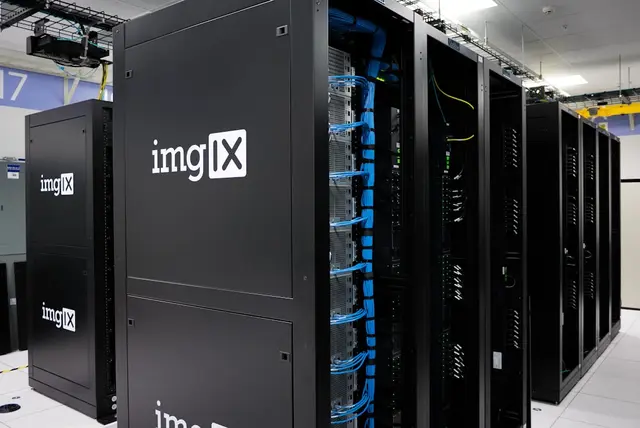
AMD's Zen 6 EPYC Venice debuts next week with up to 576 cores, 12 TB/s memory bandwidth, and native AVX-1024 support. Here's what changes for AI infrastructure.
Cognition's SWE-1.7 adds 12.2 points atop an already-trained base, challenging the field's assumption that RL post-training hits a hard wall.

Tencent's Hy3 benchmarks between models 2–5x larger by parameter count. 256K context, Apache 2.0, 1 yuan per million input tokens. The catch: vendor benchmarks need independent testing.
Z.AI's open-weights GLM-5.2 hits 81% on Terminal-Bench, undercutting GPT-5.5 for a fraction of the cost. Here's the benchmark breakdown.
Google's open 26B diffusion model hits 700+ tok/s on consumer GPUs with day-zero vLLM support. Here's what the bidirectional architecture changes for local inference.
Rapid-MLX's new engine optimizations push DeepSeek V4 Flash 158B-A13B to 56 tok/s on a Mac. Here are the exact numbers and the tradeoffs.
A community llama.cpp fork squeezes 110 tok/s out of Qwen3.6-35B-A3B MTP on a 12GB card. Here are the exact flags and the VRAM trick to make it fit.
Multi-token prediction is merged into llama.cpp, delivering 1.4–2.2x throughput on Qwen3.6 with zero accuracy loss.
llama.cpp merged Multi-Token Prediction for Qwen3. Community benchmarks show 38→47 tok/s on RTX 3090 and 63→84 tok/s on RTX 5090 — no new hardware needed.
One llama.cpp flag—--spec-draft-p-min 0.75—turns MTP from a dud into a decode speed that holds flat across output lengths where DFlash falls apart.

The --spec-draft-p-min filter in llama.cpp PR #22397 rescues MTP for Qwen3.6-27B: 48.9 tok/s vs 29 tok/s at 2000 tokens on a 24GB card.

vLLM 0.21.0 shipped Friday with a quiet fix: thinking_token_budget was being silently ignored when MTP speculative decoding was enabled. If you serve reasoning models with spec decode, you have been paying for it.

A server-side bug in Claude Code v2.1.100+ inflates every request by roughly 20K cache_creation tokens — about 40% overhead. Pin v2.1.98 until fixed.
Qwen3.6-27B running locally now scores within 10 points of frontier closed models on SWE-bench Verified. The benchmark table, lined up side by side.